Knotgrass
Polygonum aviculare



To support our efforts please browse our store (books with health benefits, etc.).
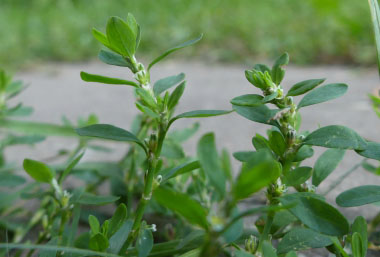
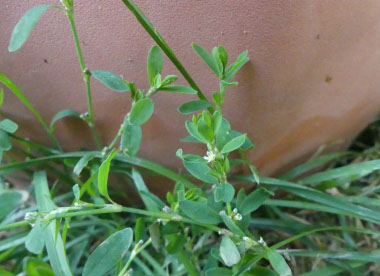
Common knotgrass is an edible, low-growing, weedy grass that is very hardy. The stems have nodes and when closely examined, they have attractive flowers. Many people consider this a nuisance weed as it tends to like the side of driveways and through the cracks of patio stones, but the Polygonum aviculare is actually good for recovering from diarrhea. Common Knotgrass is related to buckwheat and dock. This hardy plant is drought resistant as it has a single taproot that can penetrate into the ground up to 45 centimetres.
Distinguishing Features
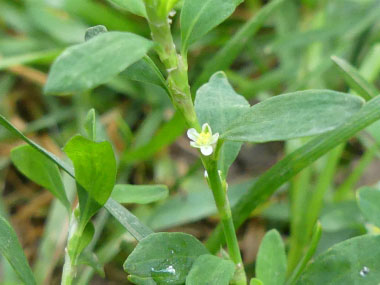
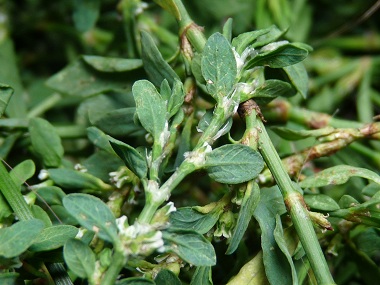
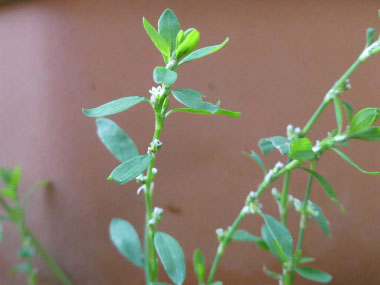
Common knotgrass has spreading stems that can reach up to one metre long that stay low to the ground. It is most often recognized as appearing in a somewhat of a spinally-circular growth that has small leaves and tiny white flowers.

- click for video -
Flowers
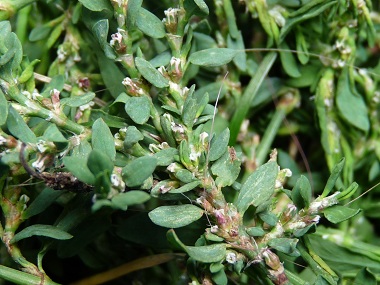
Common knotgrass begins flowering in May and depending on conditions, continues to flower into October. Cleistogamic flowers (which do not open, therefore self-pollination is necessarily) are found under the ochrea. Flowers are small, pink or greenish-white and often appear in groups of 2-5 in the axils.
Leaves
Elliptical to linear in shape, the leaves are pinnate-nerved and hardly petiolate, emerging from a thin, membranous, stem.
Height
Common knotgrass (Polygonum aviculare) does not grow vertically; it grows along the ground.
Habitat
Common knotgrass can be found in fields and in disturbed soils of waste areas. It also tends to grow along side of driveways and through the cracks of patio stones. It prefers sandy, gravelly, or rocky coastal areas, as well as grasslands.
Edible Parts
Aerial parts are gathered in the summer and can be added to salads, soups, or other dishes. Common knotgrass can also be dried and stored.
Other Name
Common Knotgrass.
Similar Plants
Spotted knotweed, Common smartweed.
Winter Survival Food Handbook

Types of Wild Food


Now available! Beginner's Guide to Safely Foraging for Wild Mushrooms