
Dahlia
Dahlia pinnata




To support our efforts please browse our store (books with health benefits, etc.).
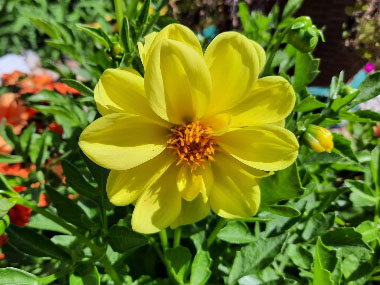
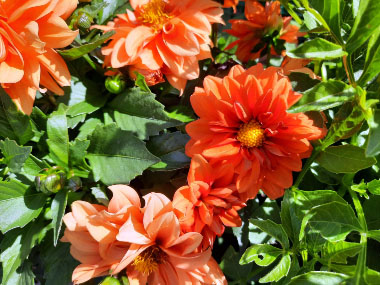
Dahlia pinnata, often referred to as "garden dahlia" originates from Mexico where it was both grown and gathered as food by the Aztecs. Many groups throughout Mexico enjoyed dahlias as food from the Tarahumara in the north, the Purépecha and Nahuatl in central Mexico, to the Mixteco, Zapoteco and Mayan in the south. Dahlias belong to the Asteraceae family and are known for their vibrant, large flowers that come in a variety of colors. It is a perennial herbaceous plant with a rhizome and tuberous roots. Dahlias were taken to Europe in the late 1700's as a medicinal plant and a source of food. The Spaniards learned that the Mexicans used the tubers as a source of food and herbal remedies to fight external skin, eye and ear infections. The French learned from the Spaniards and they also consumed dahlias; however, when crops such as potato became popular, the desire for dahlia tubers decreased. The petals can be consumed in salads for a sharp, spicy flavor. The tubers must be cooked before consuming.

Seed Life Cycle
In warm climates, this is a perennial. Annuals in colder climates.
Colours
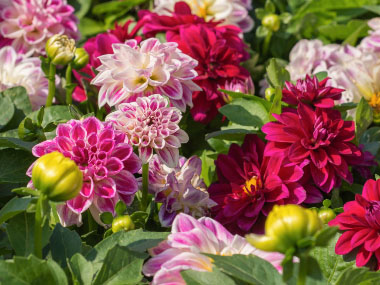
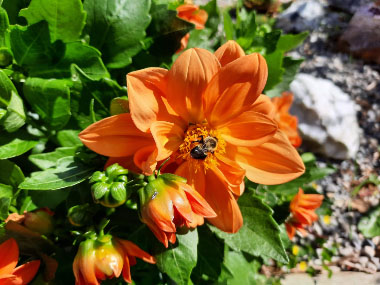
These flowers come in a variety of colors including red, pink, purple, white, yellow, and orange.
Height
On average, these flowers grow 70cm to 120cm (30" to 50") tall.
Health Benefits
Dahlia has numerous health benefits. Historically it has been used to aid in digestion and treat skin ailments (it has anti-inflammatory properties). Recent studies have found that dahlia tubers contain inulin (a prebiotic fiber) that promotes healthy gut bacteria. Dahlia petal extract has also been found to help regulate blood sugar levels by lowering inflammation and restoring insulin sensitivity.
Dye
Dahlias produce vibrant yellows, gold, oranges, and deep greens. Darker red varieties yield earthy greens or browns.
Winter Survival Food Handbook

Types of Wild Food


Now available! Beginner's Guide to Safely Foraging for Wild Mushrooms