Dulse
Palmaria palmata




To support our efforts please browse our store (books with health benefits, etc.).
Dulse is a popular sea vegetable that boasts a bounty of health benefits. Seaweeds are easily digested and contain more vitamins, nutrients and minerals than terrestrial plants. Dulse is a red algae or seaweed that grows in the northern regions of the Pacific and Atlantic oceans. It is an incredibly rich, plant-based source of vitamins (especially A, C, and B12), essential minerals and antioxidants. Dulse is a potent source of iodine (crucial for thyroid health) and iron, which can contribute to improved bone density and in preventing anemia.
Distinguishing Features
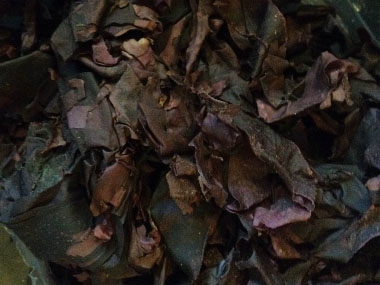
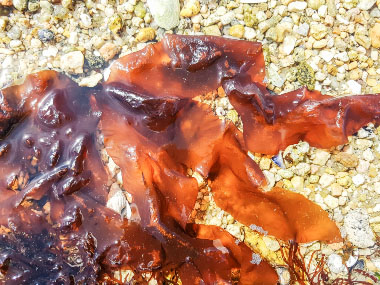
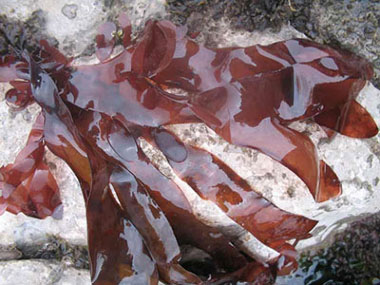
Dulse is a red seaweed that typically grows on rocks. It is reddish to brown to purple in color and is leathery in texture. Dulse is flat and membranous. It typically grows with broad, branching fronds that looks like the palm of a hand. When dried, it becomes leathery or crispy and deep burgundy in color. Dulse is sometimes confused with False Dulse (Dilsea carnosa) which is not edible. This grows much tougher, thicker, and more leathery.

Flowers
No flowers.
Leaves
The dulse fronds (the leaflike growths), are flat and range in size from 20 to 40cm (8 to 16"). When picked, a portion of the frond is left behind so that the plant will continue to grow. The fronds are reddish to brown to deep reddish to purple, and is leathery in texture.
Height
Dulse typically grows to lengths between 20 cm and 50 cm (7.5 to 19"). However, in ideal conditions, some individual fronds can grow up to 1 meter (3') in length.
Habitat
Dulse grows in intertidal locations in the North Atlantic and Northwest Pacific Oceans. It can be found growing on boulders and ledges, forming thick vegetation in low to mid-intertidal areas with different water currents.
Edible Parts
Dulse is harvested by hand at low tide usually from June through September, although it can be harvested year-round. Harvest by cutting up to 3/4s of the plant with sharp scissors, leaving the holdfast so it can grow back. It has a meaty-like flavor, similar to bacon. Dulse is one of the best sources of seaweed.
Other Name
Red Dulse.
Winter Survival Food Handbook

Types of Wild Food


Now available! Beginner's Guide to Safely Foraging for Wild Mushrooms