
Mouse Ear Chickweed
Cerastium fontanum




For comprehensive information (e.g. nutrition, health benefits, recipes, history, harvesting tips, etc.) please check out our Chickweed PDF magazine.
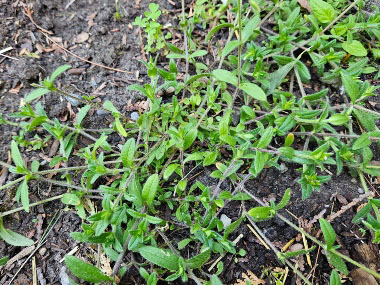
Mouse-ear chickweed is a common weed that is generally known as being a perennial. Under the right climate conditions, it can be a winter annual. Similar to the common chickweed, it has a prostrate (mat) growth pattern. This is native to Europe and globally, is one of the most widespread plants. It can be found in the subarctic and temperate zones. Mouse-ear chickweed produces seeds in the summer, fall or early spring.
Distinguishing Features
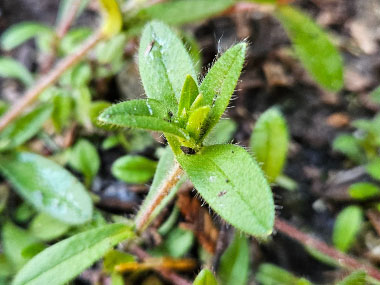
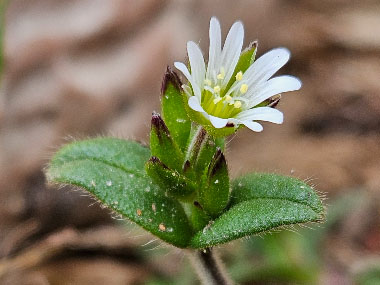
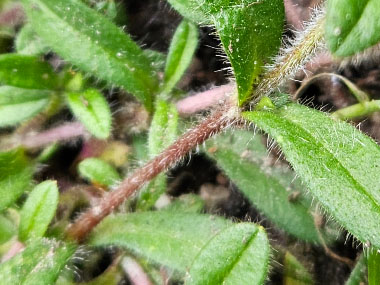
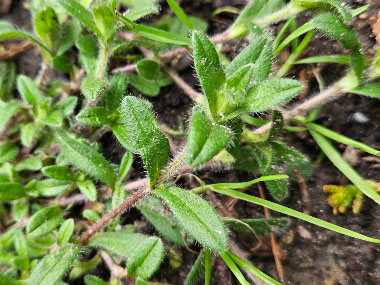
This plant grows prostate and has hairy leaves and stems. The flowers are small and similar to common chickweed flowers.

Flowers
Flowers are white and have 5 deeply lobed petals; this makes it look like 10 petals unless examining closely. There are five petals, sepals, (or tepals) in the flower. Flower petals remain closed until the sun hits them.

Leaves
Leaves are hairy and grow in opposite pairs giving them a "mouse-ear" appearance. Leaf margins are smooth. Each mature leaf varies in size from 0.85cm (1/3") to 2.54cm (1") long and 0.63cm (1/4") to 1.27cm (1/2") wide.
Height
This plant can grow from 5 to 35 cm (2 to 14"). It does not grow so much in height as it does length. The stem is usually hairy.
Habitat
Mouse-ear chickweed can be found in gardens, disturbed soils, meadows, and fields. It can grow in a variety of soils.
Edible Parts
All aerial parts can be eaten raw in salads or cooked. However, due to the hairy texture, adding it to soups, stews, casseroles, is generally prefered. Mouse-ear chickweed is tender when young, but can become tough once the plant flowers.
Other Name
Cerastium vulgatum.
Similar Plants
To support our efforts please browse our store (books with health benefits, etc.).
Winter Survival Food Handbook

Types of Wild Food


Now available! Beginner's Guide to Safely Foraging for Wild Mushrooms