Wood Nettle
Laportea canadensis



To support our efforts please browse our store (books with health benefits, etc.).
Wood Nettle is a native annual or perennial forb that can be found in rich, moist deciduous forests and along creeks and streams throughout eastern North America and as far south to Mexico. Like the Stinging Nettle, the Wood Nettle is in the Urticaceae (Nettle) family. Important! Do not confuse Wood Nettle with the non-stinging Rough Snakeroot, Ageratina altissima (which killed Abraham Lincoln’s mother, Nancy Hanks.) Rough Snakeroot does not sting. For Rough Snakeroot identification, go to GoBotany.
Distinguishing Features
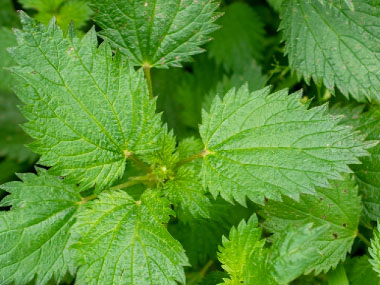
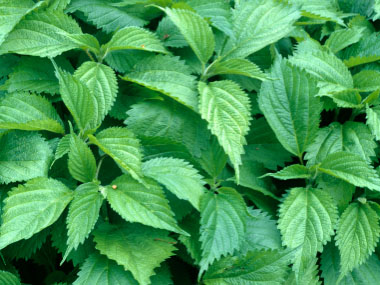
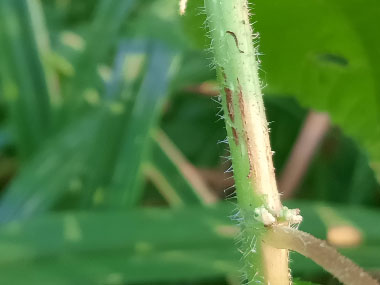
Stinging Nettles and Wood Nettles have stinging hairs and a similar appearance. However, Wood Nettle has some alternate leaves, while Stinging Nettle has opposite leaves only. Harvesting young Wood Nettles can be harvested with bare hands. As they mature, the trichomes become more pronounced and the sting intensifies.

Flowers
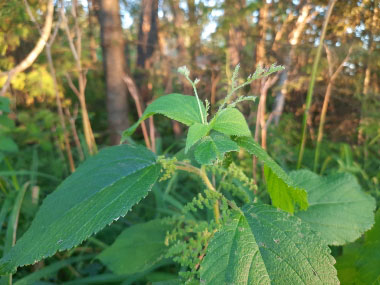
There are male and female flowers on the same plant. Female flowers are green with 4 sepals. They are in erect or flat branching clusters at the top of the plant. Male flowers are in loose branching clusters that arise from the leaf axils starting about midway up the plant.
Leaves
Lower to middle leaves grow alternate, upper leaves are opposite. They are somewhat heart-shaped (oval to ovate) with serrated margins and a pointed tip. The leaves can grow up to 15cm (6") long. Young leaves are , and wrinkled while older leaves less hairy.
Height
Wood Nettle grows anywhere from 45cm to 1 metre (18 to 40") tall. It can be branched or unbranching and the stems are light green.
Habitat
Wood Nettles prefer partial sun to medium shade, moist and loamy soil.
Edible Parts
Wood Nettle has been described as a deep, rich spinach of the woods. Tender leaves can be cooked and used in place of spinach. Wood nettle leaves can be used to make pesto, soup, stews, sauté, or added to a frittata, omelette, etc. So long as this plant has been cooked, the trichomes can no longer sting.
Other Name
Canada Nettle.
Similar Plants
Winter Survival Food Handbook

Types of Wild Food


Now available! Beginner's Guide to Safely Foraging for Wild Mushrooms