Cattail
Typha latifolia





For comprehensive information (e.g. nutrition, health benefits, recipes, history, harvesting tips, etc.) please check out our Cattail PDF magazine.
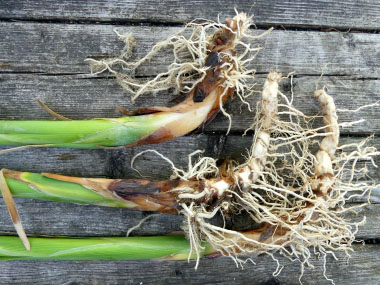
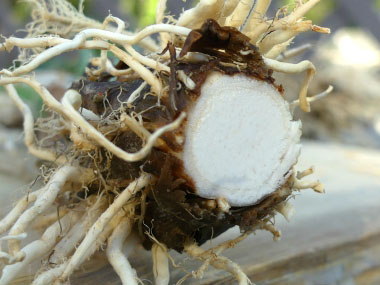
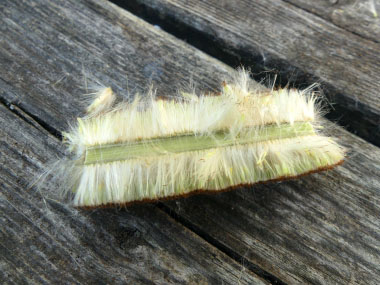
The cattail is one of the most important and most common wild foods that also boast a variety of uses at different times of the year. Cattails (aka bulrushes) can be used to make mats, baskets, and the cigar-shaped head can even be used as packing material. Dipping the head in oil or fat, they can be used as torches. Aboriginals used the roots to make flour (high in protein and carbohydrates) and the fluffy wool of the head was used as diapers because of its softness and absorbency. The fluffy wool is similar to down and can be used as insulation in clothing, pillows, mattresses, quilts, and life jackets. These “cigar-heads” are also excellent fire started. The tight heads are often dry inside even after a heavy rain, making this essential survival tinder. Inside the stalks of fresh shoots is tasty food that can be eaten as is, sautéed or tossed into a stir fry.
Distinguishing Features
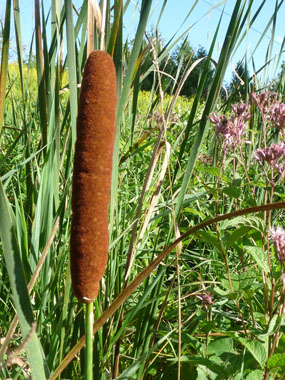
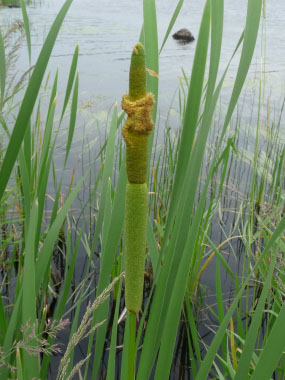
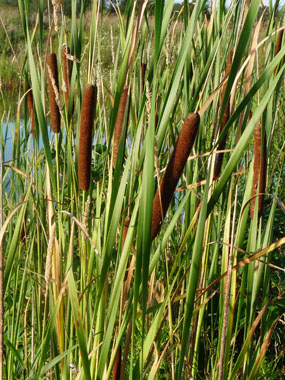
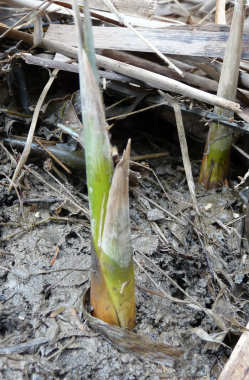
You can easily recognize a cattail; it has a brown cigar-shaped head that stands atop a very long, stout stalk. Young shoots first emerge in spring and once fertilized, the female flowers transform into the familiar brown "cigars" also called candlewicks that consist of thousands of tiny developing seeds.

- click for video -
Flowers
The cattail flower has two parts, a female and male cigar-shaped brown formation near top of stem made up of tiny, densely-packed pistillate (female) flowers. The thin yellow spike extending above female part is the staminate (male) flowers. Both male and female flowers are visible May-July. These brown flower heads open in early fall, letting its fluffy seeds emerge.
 Fields
of Nutrition has medicinal benefits and vitamin/mineral content of Cattail.
Fields
of Nutrition has medicinal benefits and vitamin/mineral content of Cattail.
Leaves
Leaves are basal, erect, linear, flat, D-shaped in cross section; 10mm to 20mm wide and 1 to 3 metres in length; 12-16 leaves arise from each vegetative shoot. Linear leaves are thick, ribbon-like structures and are pale grayish-green in colour.
Height
Cattails stand erect and vary between 1.5 to 3 metres tall.
Habitat
Open wet areas, wet thickets, swamps, ditches, and moist fields.
Edible Parts
The lower parts of the leaves can be used in a salad; the young stems can be eaten raw or boiled; the young flowers (cattails) can be roasted. Yellow pollen (appears mid-summer) of the cattail can be added to pancakes for added nutrients. Shake the pollen into a paper bag and use it as a thickener in soups and stews or mix it with flour for some great tasting bread. The root can be dried and pounded to make nutritious flour. Young shoots can be prepared like asparagus but requires longer cooking time to make them tender. Added to soup towards the end of cooking, they retain a refreshing crunchiness. They're superb in stir-fry dishes and excellent in virtually any context.
Other Name
Bullrush.
Similar Plants
Recipes
Cattail Rice, Cattail Soup, Honey Cattail Cookies, Roasted Cattail Leaves, Stewed Cattail and Tomatoes
To support our efforts please browse our store (books with health benefits, etc.).
Winter Survival Food Handbook

Types of Wild Food


Now available! Beginner's Guide to Safely Foraging for Wild Mushrooms