Garlic Mustard
Alliaria petiolata



For comprehensive information (e.g. nutrition, health benefits, recipes, history, harvesting tips, etc.) please check out our Garlic Mustard PDF magazine.
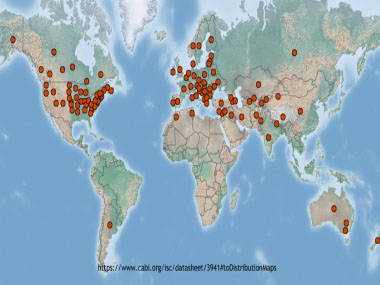
Garlic Mustard is a biennial herb that has been labeled an invasive weed in many areas. Originally from Europe, this nutritious plant is found in many locations across North America. The flower of this wild edible only appears from May to June. Garlic Mustard is good for your weight, heart, lowers cholesterol, may help prevent cancer, as well as many other health benefits.
Distinguishing Features
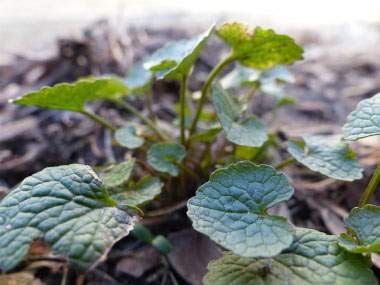
Broad heart-shaped or kidney-shaped leaves, coarse, rounded teeth, petite flowers, onion or garlic odour, slender pods that contain the seeds.

- click for video -
Flowers
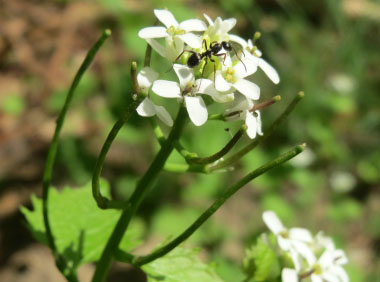
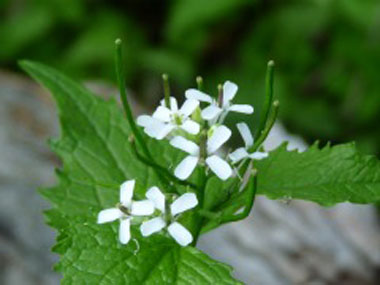
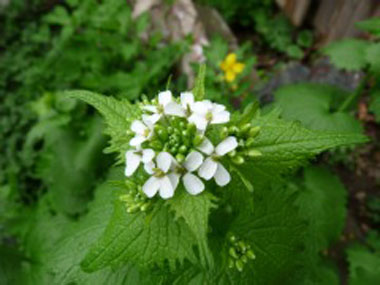
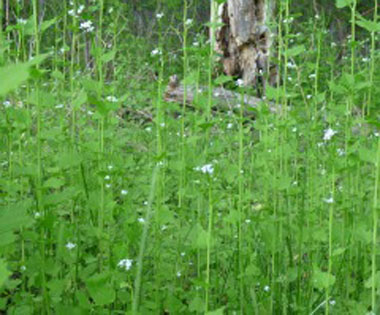
Garlic mustard flowers are easy to recognize. The outside of the mustard flower has four sepals, usually green. The flower itself has four petals usually arranged in the shape of a cross. It has six stamens: four are tall and two are short. Flowers usually appear in a cluster. Each flower measures 1 to 1.5 cm across. Flowers can appear at any time throughout the growing season of year two of the plant's growth.
 Fields
of Nutrition has medicinal benefits and vitamin/mineral content of Garlic Mustard.
Fields
of Nutrition has medicinal benefits and vitamin/mineral content of Garlic Mustard.
Leaves
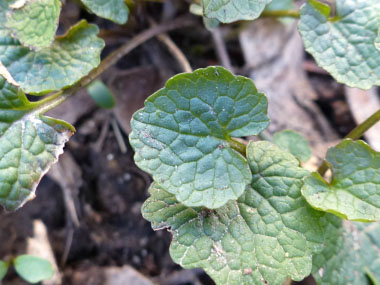
Leaves grow one to seven centimetres in diameter and are anywhere from kidney to heart- shaped, with large rounded irregular teeth. First year plants have just a rosette of smaller round or kidney-shaped leaves with scalloped edges. Leaves may be hairless or hairy to varying degrees.
Height
10 cm. to 1 metre.
Habitat
Grows across many areas of Canada and the U.S. along fence lines, wooded areas, swamps, ditches, roadsides, railway embankments and takes advantage of disturbed areas. This plant is often found in open disturbed forests.
Edible Parts
Flowers, leaves, roots and seeds. Leaves in any season can be eaten but once the weather gets hot, the leaves will taste bitter. Flowers can be chopped and tossed into salads. The roots can be collected in early spring and again in late fall, when no flower stalks are present. Garlic mustard roots taste very spicy somewhat like horseradish. In the fall the seed can be collected and eaten.
Other Name
Jack-by-the-Hedge.
Similar Plants
Recipes
Chicken Weed Wrap, Fire Cider, Garlic Mustard Ferment, Garlic Mustard Horseradish, Garlic Mustard Pesto, Garlic Mustard Stuffed Mushrooms, Wild Mustard Pesto, Sesame and Wilted Green Saute, Wild Pizza, Wild Roasted Cabbage, Wild Scalloped Potatoes
To support our efforts please browse our store (books with health benefits, etc.).
Winter Survival Food Handbook

Types of Wild Food


Now available! Beginner's Guide to Safely Foraging for Wild Mushrooms